
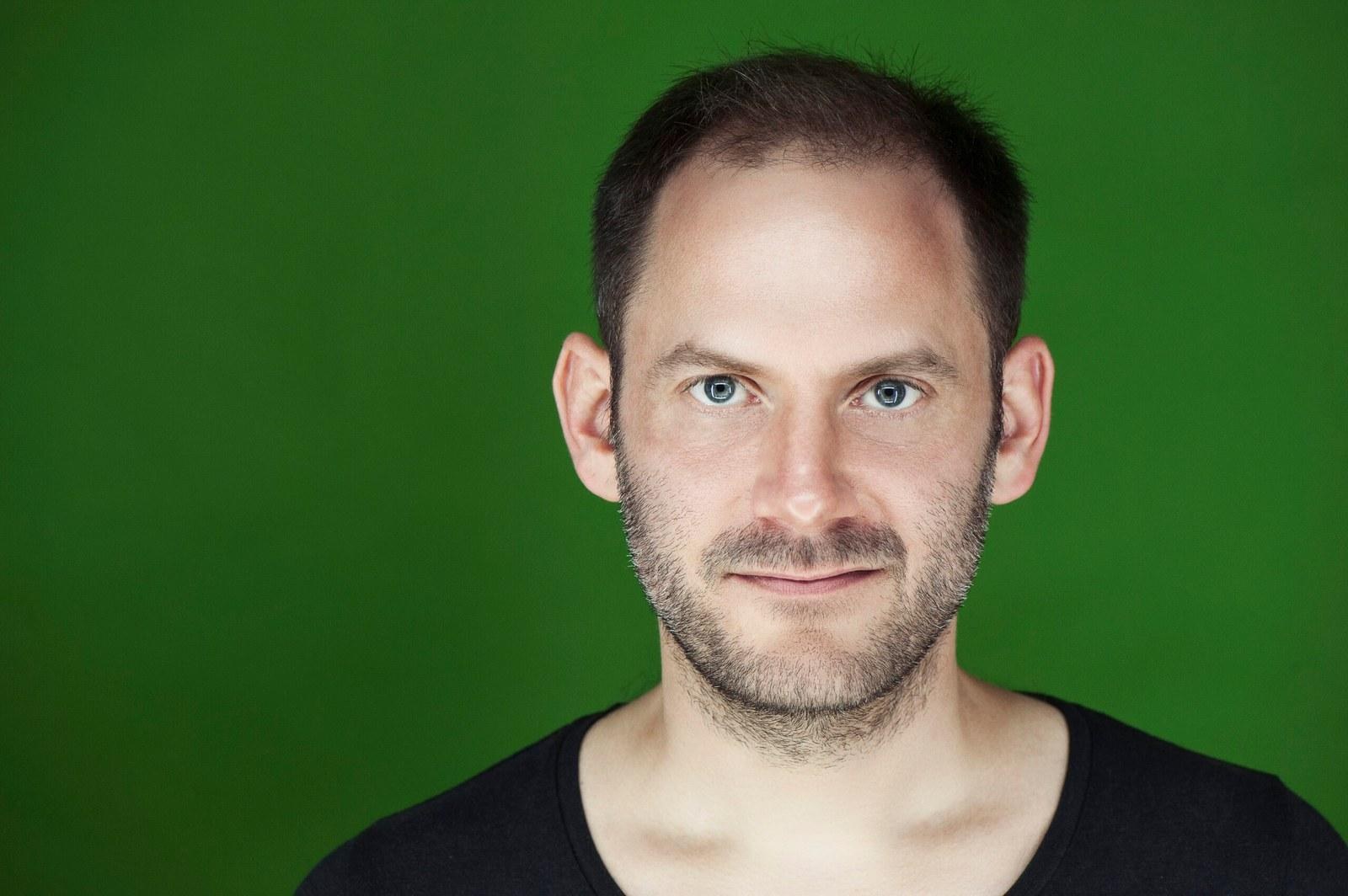
Biography
Atmos is the project of Tomasz Balicki, a Polish-born producer raised in Sweden who became one of the defining artists of Scandinavian progressive Psytrance. Balicki began making electronic music in the mid-1990s after first working as a DJ. An early collaboration with Magnus under the name The Mato Project produced “I’m Not Coming Back” for the 1998 compilation Musica Psychedelica Scandinavica; after the partnership ended, Balicki rearranged the project name into Atmos and continued alone. The breakthrough came at the moment when Scandinavian producers were stripping some of the density from Goa Trance and placing more emphasis on groove, space and hypnotic repetition.
Atmos’s early singles and the 2000 album Headcleaner became central to that transition. Instead of filling every bar with melodic layers, Balicki used carefully controlled bass, looping motifs, subtle filter movement and a deep sense of forward momentum. The music could sound minimal beside classic Goa, but its detail was in timing, texture and gradual development. 2nd Brigade followed in 2004, and Tour de Trance in 2008 showed a producer increasingly comfortable moving between progressive trance, psychedelic music and wider club influences. Balicki has never treated genre borders as fixed; techno, house and deeper trance ideas have regularly appeared in his sets and productions.
In 2026 Atmos returned with The Bigger Picture on Iboga Records, a particularly revealing late-career album. The project began with forgotten or unfinished ideas from the 1990s and rebuilt them with modern production. Instead of simply imitating old Goa Trance, Balicki preserved its long-form structures, acid logic and psychedelic instability while giving the material contemporary depth and weight. That makes the album a useful summary of Atmos’s place in the scene: rooted in the original Goa-to-progressive transition, but still willing to re-examine that history instead of merely reproduce it.
Origins of Atmos
Balicki began producing around 1995 after acquiring early studio equipment. The immediate precursor to Atmos was The Mato Project with Magnus. Their collaboration appeared on a Scandinavian psychedelic compilation in 1998; creative differences ended the duo, after which Balicki continued as Atmos.
Early career
The first Atmos releases arrived just as Swedish and Danish producers were developing a slower, cleaner and more groove-centred alternative to dense Goa Trance. Headcleaner (2000) became one of the key albums associated with that change. Atmos is remembered less for one signature track than for a production language built on restrained arrangements, strong low-end control and hypnotic repetition.
How the career developed
2nd Brigade (2004) and Tour de Trance (2008) extended the progressive approach while allowing more club-oriented material into the project. Atmos remained an active touring name even when full albums became less frequent. The Bigger Picture (2026) is a major return to album format and deliberately reconnects the mature producer with unfinished or remembered 1990s Goa ideas.
Atmos sound
Atmos is foundational Progressive Psytrance, but the project has always drawn from progressive trance, techno and house as well. The classic sound is spacious and rhythmic: rolling bass, arpeggiated motifs, subtle acid, long transitions and restrained melodic development. The Bigger Picture reintroduces more explicitly old-school Goa structures while retaining modern clarity and low-end weight.
Place in psytrance history
Atmos charts the Scandinavian shift from 1990s Goa Trance toward progressive psychedelic trance. Headcleaner helped establish a vocabulary that influenced labels, producers and festival programming across the 2000s. The 2026 return to Goa-derived structures also makes the project a living connection to that transition instead of only a historical reference.
Connections and influence
Atmos is closely connected to the Scandinavian progressive lineage around Spiral Trax and later Iboga-oriented culture. The project is useful for understanding how Progressive Psytrance emerged through subtraction, groove and studio control rather than through a simple reduction in BPM.
Atmos today
Active. The album The Bigger Picture was released by Iboga Records in July 2026, alongside continuing DJ and production activity.
How the sound changed over time
Selected releases in the archive
Festival connections
Boom Festival
Founded in Portugal in 1997 as a Goa Trance gathering, Boom Festival evolved into a major multidisciplinary psychedelic culture festival based at Boomland near Idanha-a-Nova.
Psy-Fi
Psy-Fi was a Dutch psychedelic music and arts festival launched in 2013, best known for its De Groene Ster years near Leeuwarden; a planned 2025 German return was cancelled before taking place.
Shankra Festival
A Swiss Psytrance festival founded by Mahi and Madu Murugar in Lostallo in 2015, combining Alpine landscape, psychedelic music, art and community; its Swiss edition is rebuilding toward a planned 2027 return after repeated.
ZNA Gathering
A biennial Portuguese old-school Goa Trance gathering built around retro-futuristic music culture, community continuity and a deliberately intimate psychedelic environment.
Related projects and collaborations
Artists with overlapping styles
Gaudium
Gaudium is a Swedish Progressive Psytrance project founded in 2004 by Andreas Wennersköld and Denis Bajramovski and later continued by Wennersköld as a solo-led act.
Captain Hook
Reshef Harari’s Israeli Psytrance project, known for deep hypnotic arrangements, analogue-minded production and a deliberate crossover between psychedelic trance and techno.
Zen Mechanics
Dutch producer Wouter Thomassen’s progressive psychedelic-trance project, known for expansive open-air sound design and the influential 2008 album Holy Cities.
Ace Ventura
Yoni Oshrat’s Israeli Psytrance project, combining progressive groove, psychedelic detail and long-form DJ storytelling across a wide network of collaborations.
Freedom Fighters
Shahaf Efrat’s Israeli psychedelic project, blending Progressive Psytrance with darker, techno-influenced and experimental directions.
Liquid Soul
Swiss producer Nicola Capobianco’s long-running progressive Psytrance project, one of the defining acts of the Iboga Records sound and still highly active in 2026.