
Biography
Chakra belongs to the formative generation of Israeli trance projects that emerged as Goa trance was becoming a distinct domestic scene in Israel. Closely associated with producer Ofer Dikovsky, the project developed during the 1990s and became part of the same creative environment that produced many of the country’s best-known early psychedelic acts.
The music captured the transition between classic Goa trance and the tighter, more rhythmically focused psychedelic trance that followed. Long melodic lines and acid-derived textures remained important, but the production increasingly emphasised stronger low-end and more direct dance-floor pacing. Collaborations and connections with artists including Edi Mis further situate Chakra inside the dense network of Israeli producers who frequently exchanged ideas and studio time during the period.
Chakra’s significance is historical as much as discographical. The project helps explain how the ornate melodic language of mid-1990s Goa trance was adapted into the cleaner, more forceful Israeli psytrance sound of the late 1990s and early 2000s. Later appearances and reissues have kept the name visible, but its central importance remains rooted in that transitional era.
Origins of Chakra
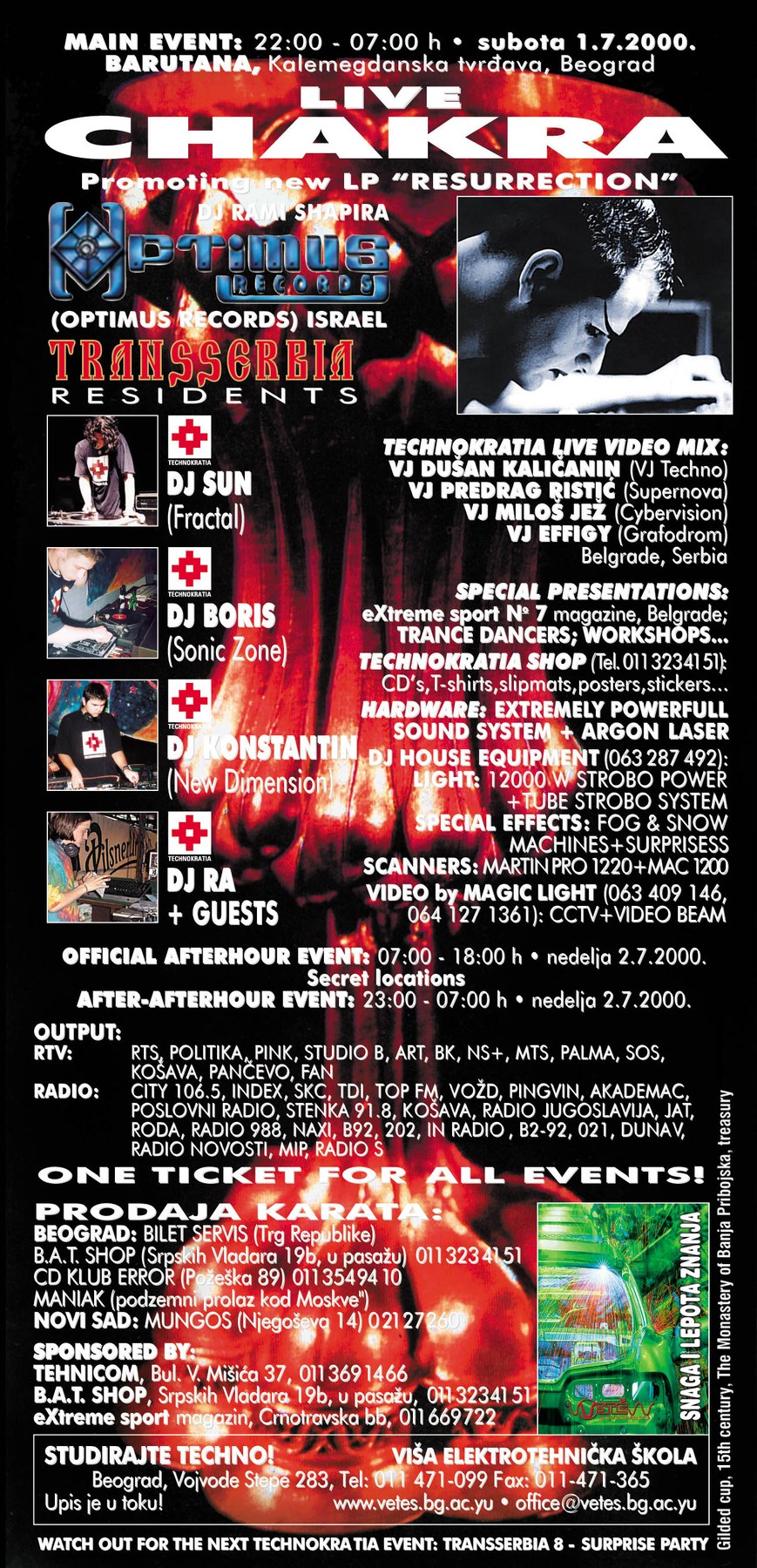
Rami Shapira moved from earlier electronic music into psychedelic trance, first working with Itzik Levy as Witchcraft before establishing Chakra as his solo identity.
Early career
Early Chakra tracks followed the Witchcraft period; in 1996 Shapira collaborated with Edi Mis on the Krembo album The Promised Land.
How the career developed
Chakra continued through solo releases, label activity and collaborations before the HOMmega album Crossover in 2008. Recent appearances focus strongly on classic/Retro Goa repertoire.
Chakra sound
Classic Israeli Goa Trance evolving toward early Psytrance: melodic sequencing, acid colour, driving rhythm and increasingly compact dance-floor structure.
Place in psytrance history
Chakra is part of the formative Israeli Goa Trance generation and connects the early 1990s underground, Krembo-era releases and later HOMmega Psytrance culture.
Connections and influence
Related artists, labels and topics: Goa Trance; Psytrance; Witchcraft; Sandman; Edi Mis; Chakra & Edi Mis; Krembo Records; HOMmega Productions; Israeli regional scene.
Chakra today
Active/intermittent in 2026 as a heritage performer: Waterfall Festival Koh Phangan listings explicitly advertise Chakra (Rami Shapira) Retro Goa Trance sets.
How the sound changed over time
Selected releases in the archive
Related projects and collaborations
Artists with overlapping styles
Dado
French producer Frédéric Holyszewski, a foundational psytrance figure behind Deedrah, Transwave and numerous side projects, with Dado functioning as his broader artist identity.
Deedrah
Frédéric Holyszewski’s solo project, bridging the first French Goa wave, early-2000s Full-On and later progressive electronic forms.
Domestic
Ido Ophir’s Israeli psytrance project, notable both for its late-1990s roots and for Ophir’s wider influence as a mix and mastering engineer.
Indoor
Foundational Israeli Goa Trance project created by Avi Algranati, Ofer Dikovsky and Marko Goren, later revived by Algranati and Dikovsky.
Oforia
Ofer Dikovsky’s long-running Israeli psytrance project, linking the 1990s Goa era with later Full-On and modern psychedelic production.
Space Cat
Avi Algranati’s veteran Israeli project, bridging the early Goa scene with melodic, acid-rich Full-On Psytrance.