
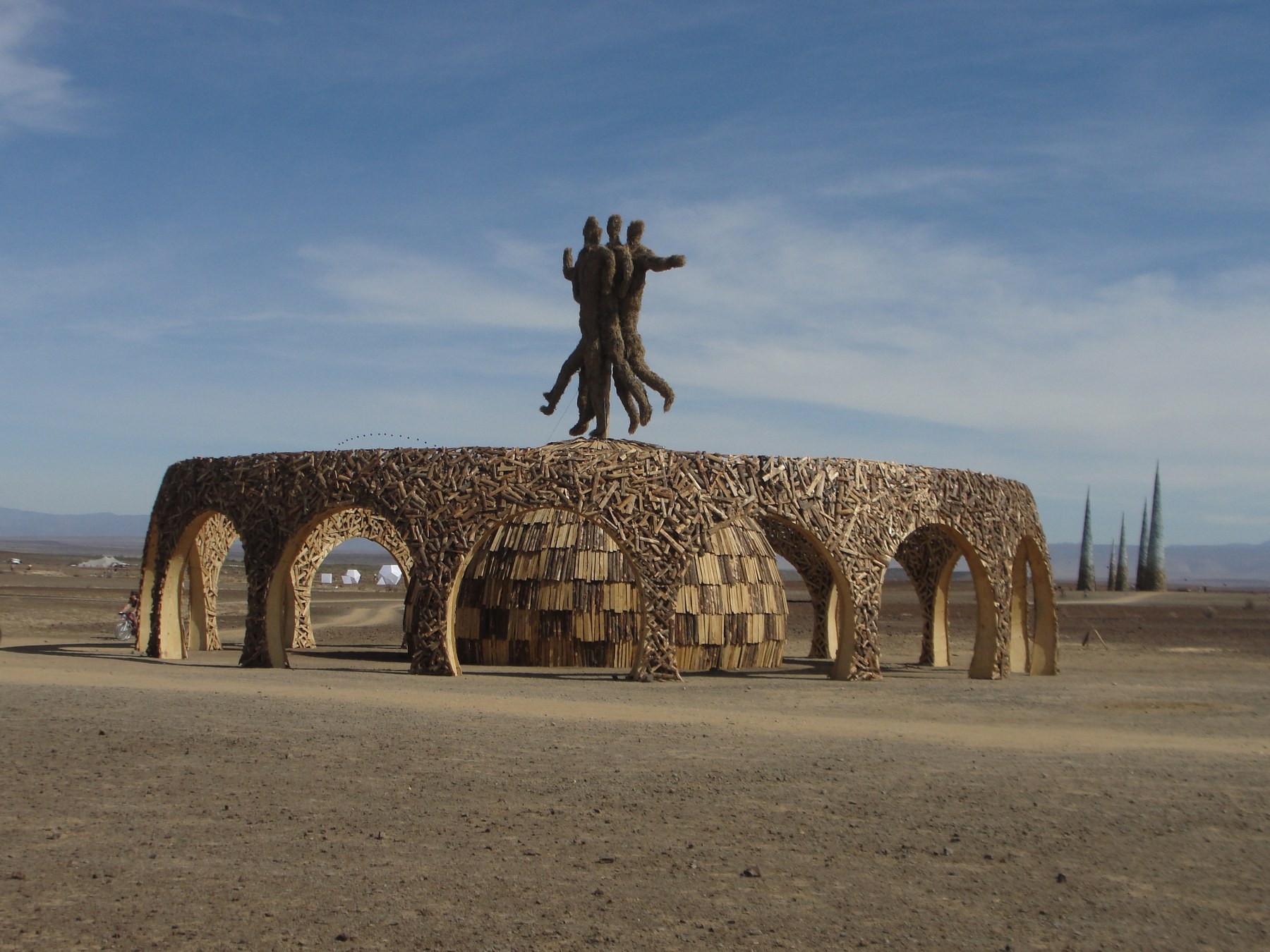
AfrikaBurn at a glance
AfrikaBurn is South Africa’s Burning Man regional gathering, held in the Tankwa Karoo and built around participant-created art, theme camps, mutant vehicles, performance, gifting and temporary community. It belongs on a wider psychedelic and transformational-festival map because of the culture that has grown around it, but it should not be described as a conventional music festival. AfrikaBurn does not programme a headline line-up: music, performance and nightlife are created by participants themselves.
The organisation dates to 2007. The first planned event was disrupted by flooding, but an inaugural gathering called Tribe took place later that year at Stonehenge Farm. The name changed from Afrika Burns to AfrikaBurn in 2008. Stonehenge remained home through 2019, after which the physical 2020 and 2021 events were lost to the pandemic. AfrikaBurn returned in 2022 at Quaggafontein, its long-term Tankwa home, and remains active, with 26 April–2 May 2027 already announced.
How AfrikaBurn evolved
The roots of AfrikaBurn stretch back to contacts between South African organisers and the Burning Man network in the early 2000s. Afrika Burns Creative Projects was formed in 2007 as the non-profit structure behind a South African regional burn. The founding period involved Paul Jorgensen, Lil Visser/Black, Michael ’t Sas-Rolfes, Monique Schiess, Richard Bowsher and Robert Weinek, among others.
After the inaugural 2007 event, the gathering established an annual rhythm in the Tankwa Karoo. From 2010 it moved to the end of April, when the autumn climate is more manageable and South African public holidays make the journey easier. In 2019 AfrikaBurn secured a 99-year home at Quaggafontein; the pandemic delayed the first full gathering there until 2022. Since then the new site has become the centre of the community’s annual temporary city.
Music, programming & dancefloors
AfrikaBurn has a large and diverse sound-camp culture, but no central music booking policy. Participant camps may play Psytrance, techno, house, ambient, bass music, live music or almost anything else. That diversity is precisely why assigning AfrikaBurn a narrow festival genre would be misleading.
For Psytrance audiences, its relevance comes through individual camps and the broader overlap between burn culture, psychedelic art, alternative community and electronic music rather than through a dedicated Psytrance programme.
Role in psytrance festival culture
AfrikaBurn is one of the most important large-scale participatory art gatherings in the Southern Hemisphere. Its guiding principles centre radical inclusion, gifting, decommodification, self-reliance, self-expression, communal effort, civic responsibility, participation, immediacy and Leave No Trace, with the South African addition Each One Teach One.
The event’s central Clan effigy, derived from southern African San rock-art imagery, gives the gathering a distinctive ritual focus. More broadly, AfrikaBurn matters because it rejects the normal audience/performer divide: the temporary city exists only because participants build the camps, artworks, performances and services themselves.
Place, setting & atmosphere
The Tankwa Karoo is remote, dry and unforgiving, so self-reliance is not decorative language but a practical requirement. Participants are expected to bring what they need, manage water and waste carefully and remove what they bring in. Restoration of the desert site after the event is a core organisational responsibility.
The move from Stonehenge to Quaggafontein gave AfrikaBurn a long-term base where site planning, access, art infrastructure and environmental recovery could be developed over many years rather than renegotiated edition by edition.
What sets AfrikaBurn apart
Founded in 2007; renamed AfrikaBurn in 2008; Stonehenge home through 2019; Quaggafontein home from 2022; no centrally booked artist line-up; participant-built theme camps and mutant vehicles; a central Clan burn; gifting and decommodification; and one of the largest Burning Man regional communities in the world.
Continue exploring festival culture
Continue with the Psytrance Festival Culture guide or explore the genres linked above.